Sep 15, 2026
Operations
Supplier Price Creep: Checking Invoices Line by Line
Read time: 4 min read
Key Takeaways
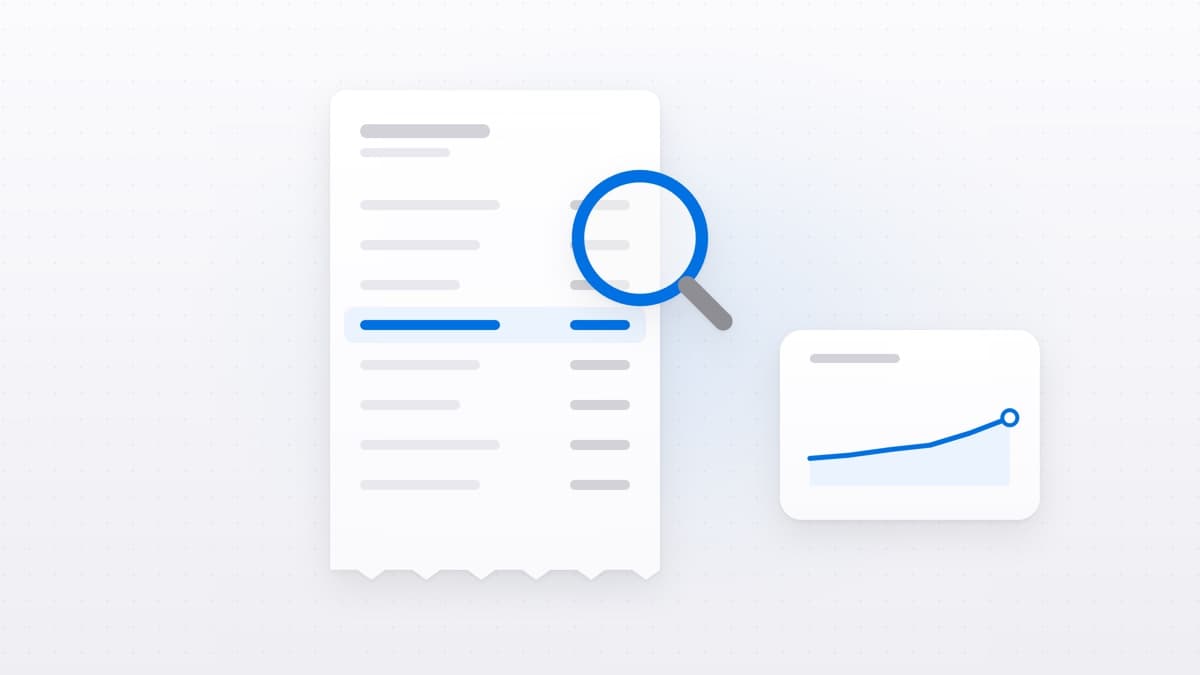
Price creep hides in single invoice lines, not in the weekly total. Track the unit price on your 20 biggest lines, watch pack sizes and new fees, check the maths, and compare with last month and a second supplier.
What price creep looks like
Price creep is a small rise on one line of an invoice that never shows up in the total. The weekly total moves around anyway, because you ordered a bit more one week and a bit less the next. So when one product goes up 6%, it disappears into the noise.
A venue owner sees the weekly total. They don't see that one product went up 6% three weeks ago. The rise lives on the line, and the only way to find it is to read the lines.
Nobody has time to read every line of every invoice. You don't need to. Read the ones that matter.
Start with your top 20 lines
Go through your recent invoices and pick the 20 lines you spend the most on. Those are the ones where a small rise costs real money.
For each one, record the unit price: per kilogram, per litre or per each. Not the line total. The line total changes with how much you ordered. The unit price is what the supplier is actually charging you.
Watch the pack size too. The same price for a smaller pack is a price rise, and it's the easiest one to miss because the invoice looks the same as last time. A spreadsheet with one row per product and one column per delivery is enough to keep track.
Check the extras and the maths
Two more things to check on every invoice:
- New surcharges and delivery fees. A fee that wasn't there last month is a price rise, even if every product price stayed put.
- The arithmetic. On each line, quantity × unit price should equal the line total, and the lines should add up to the subtotal. If they don't, ask the supplier before you pay.
Compare against last month and a second supplier
A unit price on its own doesn't tell you much. Compare it with what you paid last month. Every so often, get a quote from a second supplier for the same lines.
You don't have to switch. Knowing the going rate is enough to have a straight conversation with the supplier you've got. Start with the rise that costs you the most over a year. A small rise on something you buy every week adds up faster than a big one on something you buy twice a year.
What MightySmall does
MightySmall is my product for this check, in beta with hospitality venues. It covers every line, not just the top 20.
It picks up supplier invoices from Gmail (through an add-on, since December 2025) or Outlook, or you can upload a PDF, PNG or JPG. It reads every line: supplier, product, quantity, unit price and GST. Each line is matched to a product using the supplier's code first, then the exact description, then corrections you've made before, then a search. A match stays provisional until it's confirmed.
It then compares your unit price with what other venues in the region pay for the same product, anonymously. There's no comparison until there are at least 5 prices for that product. A weekly digest shows up to 5 price alerts, ranked by what each would cost you over a year, and the same alert doesn't repeat within 14 days.
If you want help setting up the check for your venue, book a call or see MightySmall.
Recent articles
Plain writing on operations, compliance and the systems businesses actually run on.
Dec 1, 2026
Operations
Care Minutes Reporting Without the Spreadsheet
How one aged-care group swapped a quarterly reporting spreadsheet for a dashboard that is up to date every morning.
Nov 24, 2026
Compliance
Keeping a Trade Fleet Road-Ready Without a Clipboard
Paper pre-starts get filled in late and defects go nowhere. How I set up phone checks, defect alerts and odometer servicing for a WA plumbing business.
Tell me what your business runs on today
A 30 minute call. You describe the spreadsheets, the apps and the paperwork; I tell you what I would build and roughly what it would cost.